How to Avoid Fake Botox Scams: Verify Your Vial and Injector in 2026
Kiara DeWitt
08/12/2025
7:19 am
Table Of Contents
Fake Botox can look convincing online, in social media offers, or in low-price injectable deals. Counterfeit Botox in Texas is not just a bad deal. It can expose you to unknown ingredients, wrong dosing, unsafe handling, or botulism-like symptoms.
The safest way to avoid fake Botox scams in 2026 is to verify the product source, the injector’s license, and the medical setting before anything is injected.
Written by Kiara DeWitt, BSN, RN, CPN. Medically reviewed by Josh Allen, D.O., Medical Director. Last updated August 2026.
Key Takeaways
The FDA warns against counterfeit, mishandled, or improperly sourced products and reports adverse events, including hospitalizations, linked to fake Botox. (Jump to this section)
Check the legitimacy of a Botox product by reviewing the vial for details such as size, active ingredient, manufacturer, and language on the packaging. (Jump to this section)
Verify your provider. A licensed injector should be able to explain their credentials, product source, and dosing process. (Jump to this section)
Physicians, physician assistants, advanced practice registered nurses, and registered nurses can legally inject Botox in Texas, and everyone other than the physician does so as a delegated act under a physician’s order. (Jump to this section)
Botox is priced per unit. A price far below what other licensed clinics near you charge, with no membership and no clear reason behind it, is worth questioning. At InjectCo, Botox is $12 per unit, or $9 per unit for members. (Jump to this section)
Medical disclaimer: This article is for education only and does not replace medical advice. If you have blurred vision, drooping eyelids, trouble swallowing, trouble breathing, muscle weakness or severe symptoms after an injection, seek urgent medical care.
What the FDA Says
The Food and Drug Administration (FDA) listed counterfeit products among the risks injectables may carry. When the product is fake, mishandled, or sourced improperly, there is no reliable way to know what was injected, how strong it was, or how it was stored. Products purchased from unauthorized sources may be counterfeit, contaminated, improperly stored, ineffective, or unsafe.
The FDA reported adverse events, including hospitalizations, linked to counterfeit Botox. Symptoms included blurred or double vision, difficulty swallowing, dry mouth, shortness of breath, weakness, and difficulty lifting the head after injection.
In April 2026, the FDA issued a warning letter to a med spa in Southlake, Texas, following an inspection in December 2025. The FDA cited two violations of the Drug Supply Chain Security Act (DSCSA), transacting with parties the business could not show were authorized trading partners, and transacting in products lacking a product identifier.
Investigators found the clinic had administered significantly more Botox units than it had purchased from the manufacturer, and recovered an unlabeled vial from the facility’s trash that lab analysis confirmed contained botulinum neurotoxin type A.
This is also why cheap Botox should never be treated as only a cosmetic gamble. If the product is counterfeit or mishandled, the risk can become medical quickly.
How to Check the Vial Yourself
A Botox scam usually becomes evident when you check and assess the vial, since the details often fall apart when it comes to basic medical and product questions. A legitimate clinic will show you the vial and open it in front of you, and you are allowed to ask.
Verify each one of these details:
Vial sizes: FDA-approved Botox Cosmetic comes only in 50 unit and 100 unit vials. Botox comes in 100 unit and 200 unit vials. A vial labeled 150 units is not a real one.
Active ingredient: Both the box and the vial label should show onabotulinumtoxinA. A box reading only Botulinum Toxin Type A is a warning sign.
Manufacturer: The packaging should show Allergan Aesthetics, an AbbVie company, or AbbVie. There is a holographic image on the vial.
Language: An outer carton in a language other than English is a warning sign.
Be cautious if the injector will not explain where the product came from. The Centers for Disease Control and Prevention (CDC) advises patients to ask if the botulinum toxin product is FDA-approved and obtained from a reliable source.
Checking the vial lowers your risk. It does not remove it, so treat these checks as one part of choosing a provider rather than a guarantee of safety.
Red Flags of a Botox Scam
A Botox scam usually depends on speed, price or vague credentials. The offer may look convenient at first, but the details often fall apart when you ask basic medical and product questions. Many of the same patterns show up in our guide to the 12 warning signs of a fake med spa.
The first red flag is pricing that is far below typical market rates without a clear reason. Some specials are legitimate, but a very low price should still come with product details, unit information and a licensed injector.
Another red flag is a provider who skips the consult. A real Botox visit should include medical screening, facial movement assessment and a discussion of treatment areas. The injector should ask about medical history, medications, past reactions and treatment goals.
A fake Botox doctor scam may also rely on vague titles. Words like “specialist” or “artist” do not replace a medical license. Ask what license the injector holds, what training they completed and what oversight applies in that state.
Verify Your Injector: The Checklist
If you are asking how to tell if Botox is real, start with the provider. A licensed injector from a reputable clinic should be able to explain their credentials, product source, dosing process, and aftercare.
Ask these questions before booking:
Who will perform the injection?
What license does the injector hold?
Is the product FDA-approved and sourced through an authorized channel?
Can I see the vial first?
How many units are recommended for my treatment area?
Will there be a medical intake before treatment?
What side effects should I watch out for?
What should I do if I have a reaction?
What happens if something goes wrong?
Who do I call if there is an emergency?
You are allowed to ask all of this, and a reputable clinic will not mind. The Texas Medical Board and the Texas Board of Nursing also have a license verification tool you can use. You can also check the clinic’s team page, reviews, and pricing before scheduling.
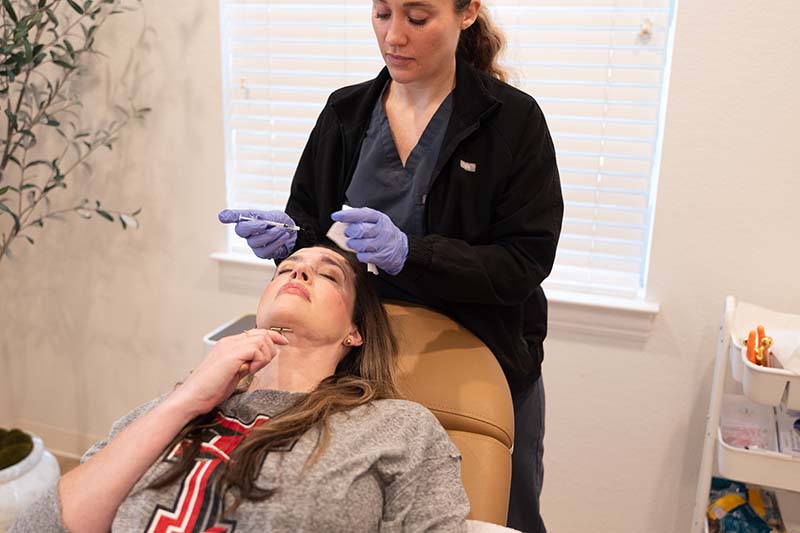
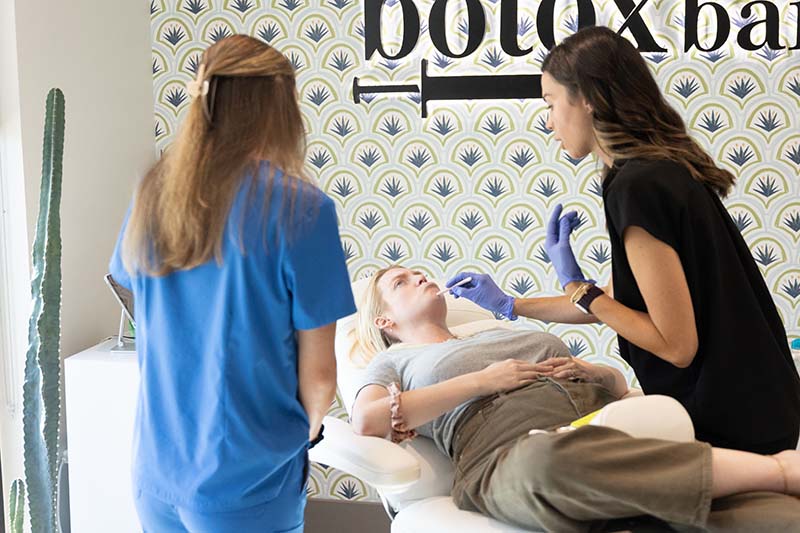
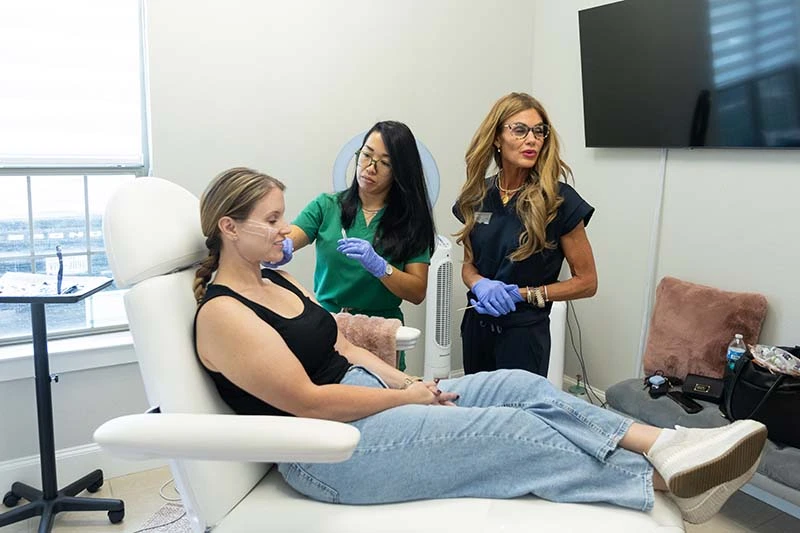
InjectCo provides Botox treatments in a med spa setting with licensed nurse injectors. Your appointment starts with a consultation before any injection is placed.
Meet With an InjectCo Nurse Injector
Ask your questions about Botox and get answers from a licensed nurse injector.
In Texas, injecting a prescription medication such as Botox is the practice of medicine. The Texas Medical Board treats nonsurgical medical cosmetic procedures, including cosmetic injections, as a medical act that a physician may perform or properly delegate and supervise. In practice that means the person holding the syringe is either a physician or someone working under a physician-approved written order. The table below sets out how that applies to Botox in Texas:
Credential
Can inject?
Supervision required
Texas authority
Physician (MD, DO)
Yes, within own scope
Not applicable
Texas Medical Practice Act
Physician assistant (PA)
Yes, as a delegated act
Yes, physician delegation
Tex. Occ. Code ch. 157
APRN or NP
Yes, as a delegated act
Yes, physician delegation
Tex. Occ. Code ch. 157
Registered nurse (RN)
Yes, as a delegated act
Yes, a physician-approved written order plus a signed written protocol
The Texas Medical Board rules on delegating nonsurgical medical cosmetic procedures, 22 TAC 169.25 through 169.28, were restructured with effect from January 2025. They set general standards rather than a list of license types: documented training, a signed and dated written protocol, a physician-approved written order, a proper practitioner-patient relationship, a medical record, disclosure of who is performing the procedure and what their title is, and a person trained in basic life support on site. Delegation to physician assistants and advanced practice registered nurses runs through Chapter 157 of the Occupations Code rather than through these rules.
For registered nurses, the delegating physician authorizes the act. The Texas Board of Nursing still holds the nurse to their own standards of practice, and a nurse is expected to decline an act they are not competent to perform. A physician’s order does not transfer that judgment to the physician.
What Normal Pricing Looks Like
Botox is priced per unit, and the rate varies between clinics and injectors. There is no official published average for Texas, so the useful comparison is what several licensed clinics near you actually charge for the same product. A price far below that, with no clear reason behind it and no membership attached, is worth questioning. It does not prove the product is counterfeit, mishandled, or improperly sourced, but it is a reason to ask more questions before you book.
If a familiar product suddenly costs much less than usual or the treatment setting changes, ask why. A real provider should welcome questions about product source, dosing and licensing.
At InjectCo, Botox is $12 per unit and $9 for members. A membership rate is not a flash sale. It is a legitimate subscription model that allows returning patients to book regular treatments at a discounted rate.
Know Your Botox Cost Before Treatment
Review the product, treatment areas, and unit count before deciding.
If you think you received fake Botox, do not try to correct the result with another injection.
More product can make symptoms harder to understand and may delay the care you need.
Start by checking your symptoms. Seek urgent medical care if you notice blurred or double vision, drooping eyelids, trouble speaking, trouble swallowing, shortness of breath, muscle weakness or difficulty lifting your head. These symptoms have been reported in connection with counterfeit botulinum toxin products.
If your symptoms are not urgent, contact a licensed medical provider and explain what happened. Share the date of treatment, the location, the injector’s name, the product name and any photos of the packaging if you have them. Do not feel embarrassed. Medical providers need accurate information to help you safely.
The CDC also advises reporting suspected counterfeit botulinum toxin products to the FDA. Patients can report suspected counterfeit products or harmful reactions through FDA reporting systems.
What to Expect at InjectCo
During the consult, your nurse reviews your goals, medical history, prior injectable experience and the areas you want to treat. Next, your nurse evaluates facial movement by asking you to frown, raise your brows, smile or squint. This helps identify which muscles are creating the lines and what unit range may be appropriate.
Before treatment begins, your nurse explains the product, recommended dose, expected timing and cost. Your nurse also reviews aftercare and what to expect as results begin to appear. Individual results vary.
Who Is Most at Risk of Botox Scams?
Botox scams often target patients who are new to injectables or shopping mainly by price. First-time patients may not know what a normal consult should include, what unit pricing looks like or what questions to ask about the product.
Bargain-focused patients may also be more vulnerable. A low price can feel appealing, especially when the offer appears on social media or comes from a friend of a friend. The problem is that counterfeit Botox may still look like a deal until symptoms appear.
Party settings can also increase risk. Botox treatment needs medical screening, clean technique, correct storage, verified product and privacy for health questions. A social setting can make it harder to slow down and ask serious questions.
Patients who already receive Botox are not immune either. If a familiar product suddenly costs much less than usual or the treatment setting changes, ask why.
Avoiding Fake Botox Starts Before You Book
Counterfeit Botox can be contaminated, improperly formulated, or illegally sourced, and that can cause harmful side effects or serious complications. The checks on this page reduce that risk. They do not eliminate it.
Before you book, verify the license of the person injecting you, ask how the clinic sources its product, review the price per unit, and make sure the appointment includes medical screening and a facial assessment before anything is injected. A clinic that welcomes those questions is telling you something useful. So is a clinic that does not.
Frequently Asked Questions
Most of the worry about counterfeit injectables comes down to the same few questions. The answers below cover how to spot product that is not what it claims to be, what the risks are, what regulators have said, and how to read a price that looks unusually low.
How can you tell if Botox is fake?
Fake Botox may have unclear sourcing, suspicious packaging, a very low price or a provider who cannot confirm the product came from an authorized source. Patients should also ask if the injector is licensed and trained before booking.
Why is counterfeit Botox dangerous?
Counterfeit Botox may contain the wrong ingredient, wrong dose or product that was stored improperly. The FDA has linked counterfeit Botox to adverse events, including hospitalizations and symptoms similar to toxin spread, such as blurred or double vision, difficulty swallowing, dry mouth, shortness of breath, weakness, and difficulty lifting the head after injection.
What did the FDA say about fake Botox?
The FDA warned that unsafe counterfeit versions of Botox were found in multiple states and administered for cosmetic purposes. FDA-approved Botox products display “OnabotulinumtoxinA” as the active ingredient on the outer carton and vial. Patients can report suspected counterfeit products or harmful reactions through FDA reporting systems.
Is cheap Botox safe?
Cheap Botox is not automatically unsafe, but pricing far below normal rates, especially without a clear reason, should prompt questions. Some specials are legitimate, but a very low price should still come with product details, unit information and a licensed injector. Ask who performs the injection, what product is used, how many units are included and where the product came from.
How do I verify a licensed Botox provider?
Ask the provider what license they hold, what training they completed and if the product comes from an authorized source. You can also review the clinic’s team page, pricing, patient reviews and state license information before booking. A fake Botox doctor scam may also rely on vague titles. Words like “specialist” or “artist” do not replace an active medical license.
What are the signs of a Botox scam?
Common signs include no consultation, unclear credentials, unusually low pricing, no product verification, pressure to book quickly and treatment in a setting that does not allow proper medical screening. The offer may look convenient at first, but the details often fall apart when you ask basic medical and product questions.
Can fake Botox cause botulism?
Fake or mishandled botulinum toxin can cause symptoms consistent with botulism. The CDC advises urgent care for symptoms such as blurry or double vision, drooping eyelids, trouble swallowing, trouble breathing or muscle weakness after injection.
Who can legally inject Botox in Texas?
A physician (MD or DO), physician assistant (PA), advanced practice registered nurse (APRN), registered nurse (RN), and in some cases a dentist, can legally inject Botox in Texas with an active clinical license that permits medical acts. Everyone other than the physician performs the injection as a delegated medical act under a physician’s order.
How do I know if the vial is real?
To check if your Botox is real and not a counterfeit product, verify four details on the vial and carton: size, active ingredient, manufacturer, and language. Botox Cosmetic is supplied only in 50 unit and 100 unit vials, and Botox in 100 unit and 200 unit vials. Both the carton and the vial label should show onabotulinumtoxinA. The packaging should show Allergan Aesthetics, an AbbVie company, or AbbVie. An outer carton printed in a language other than English is a warning sign.
Book Genuine Botox at InjectCo With a Licensed Nurse Injector
Confirm the injector’s license, ask how the clinic sources its product, and review the price per unit before you book. Your InjectCo consultation includes time with a licensed nurse injector to review product safety, recommended units, and pricing.
Dr. Allen earned his Doctor of Osteopathic Medicine at Lake Erie College of Osteopathic Medicine and completed his emergency medicine residency with Texas A&M. As Medical Director, he reviews InjectCo’s treatments, protocols, and patient education content for accuracy and safety across all nine Texas locations.
Written By: Kiara DeWitt, BSN, RN, CPN, Advanced Clinical Nurse Injector Kiara DeWitt, BSN, RN, CPN founded InjectCo in early 2021 while also heading up the neurosurgery + neurology unit at Cook Children’s Pediatric Hospital as lead clinical educator. After completing her Bachelor's degree at Texas Christian University, Kiara realized just how much the aesthetic medicine industry was missing, wishing it was more focused on ethical decision-making and building relationships. Kiara’s dream was to create an atmosphere for her patients where they feel loved, empowered, and comfortable. She believes in a “lead to serve” mentality, hoping to create a more personal connection with both her patients and team alike. Kiara curated a team of 13 professionals across eight clinics, six of which are in DFW, one in Houston, and one in Austin.
Kiara loves nothing more than creating a collaborating, educational approach with her team, and thrives on personal and professional growth opportunities. She hopes that her patients feel heard and encouraged at every InjectCo visit and that they are truly excited about their personalized and well-designed aesthetic treatment plan. This love for education and safety in the industry led her to later found Texas Academy of Medical Aesthetics, an accredited training program that specializes in a 100+ hour aesthetic injector internship where students are able to train and shadow at all eight of InjectCo’s clinics.
Kiara’s patients recognize her and the entire InjectCo team as highly skilled and extremely thorough clinicians. She hopes to continue being a knowledgeable and approachable resource for clinical injectors across the country who are hoping to grow and scale their aesthetic business.
Most people start planning holiday treatments in the first week of December, which is roughly a month too late for anything injectable. October is the planning month for treatments that carry downtime or build gradually. November is the las...
Schedule Botox at least two weeks before a North Texas fall event, and dermal filler at least four weeks before. Football weekends, the State Fair of Texas, Thanksgiving and December parties land close together here, so the booking decision...
Your Botox softened the frown, but a line still sits between your brows at rest. The deciding factor is simple. A line that disappears when your face is relaxed is dynamic and usually responds to a neuromodulator, with the full result judge...